
Loading cart...

If your dog has delicate digestion, it’s likely that you’ve been on the look-out for ways to soothe their sensitive tummy. Maybe you’ve tried special diets, pet foods, or visited your vet? But did you know that probiotics for dogs can play a role too? So what are probiotics, and how can they support your dog’s digestive system?
Ever eaten a live yoghurt or drank goats milk? That’s a probiotic. But when we talk about dog probiotics, we mean live microorganisms which – when given in the right amount – result in a health benefit on the host. There are hundreds of different species and probiotic strains of good bacteria in the gut, but the probiotic Enterococcus faecium E1707 is the EU-registered strain that’s best for dogs and cats. This is the probiotic found in our YuMOVE Digestive Support range of dog probiotics.

The most obvious signs to watch out for are runny poos and lots of wind. However, there are some less obvious things to watch out for too. Lack of appetite, a dull coat and poor overall health can also be signs that their digestion isn’t in tip-top health.
Probiotics can help support your dog’s digestion by topping up good bacteria and helping maintain a balanced gut microbiome. They can also support stool quality, digestion and the immune system, helping to keep everything feeling settled from top to, well… bottom.
 Looking for digestive care for your pet?
Enter their details to find the best digestive care product for your pet
Looking for digestive care for your pet?
Enter their details to find the best digestive care product for your pet
Some of the benefits of probiotics and how they work, include supplementing good bacteria in the gut, helping to restore and stabilise levels of these amazing little useful microbes. They also out-compete the ‘bad’ bacteria for sources of energy in the intestine, reducing the numbers of bad bacteria. This action can be complemented by the addition of soluble fibres called ‘prebiotics’. These bind and remove harmful bacteria that can cause digestive upsets, whilst feeding the good bacteria. Read our guide to the benefits of fibre for dogs.
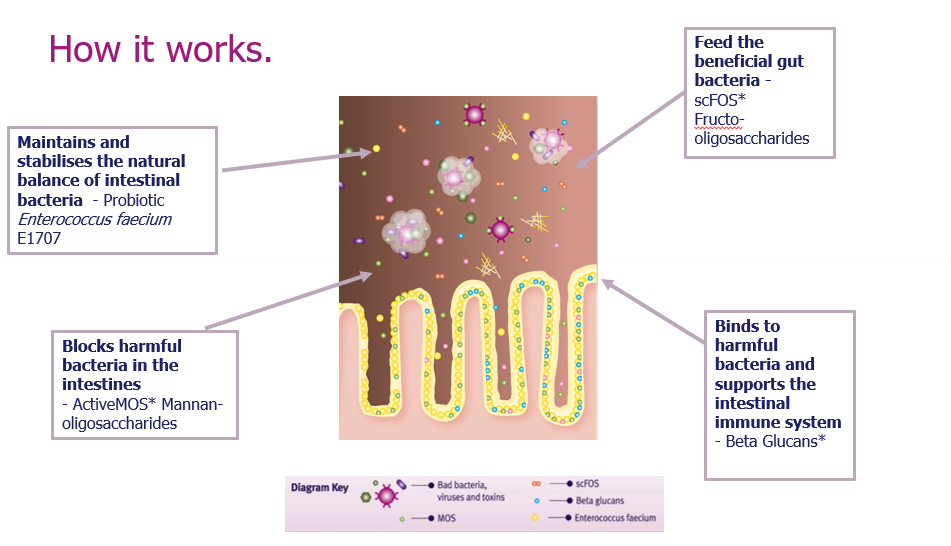
Probiotics are the ‘fighters’ – they contain beneficial bacteria that work to eradicate ‘bad’ bacteria.
Prebiotics are the ‘support team’ – they’re made with substances helpful for microbial growth in the gut. They don’t get digested, they just promote healthy bacterial growth. A mixture of prebiotics and probiotics is known as a symbiotic – they work together to help get your dog’s tummy back on track.
Probiotics are live “good” bacteria that help support a balanced gut microbiome. Prebiotics are what those good bacteria feed on, helping them grow and do their job. In simple terms, probiotics top up good bacteria, while prebiotics help nourish the good bacteria already in your dog’s gut.

There are two different ways to use dog probiotics. You can use a daily supplement like YuMOVE Digestive Support Pre & Probiotic Tablets for Dogs to support digestive health, keep stools firm and increase ‘good’ bacteria in the gut. This approach is ideal for dogs who’re prone to digestive challenges. Read about the best YuMOVE probiotics for dogs.
But what if your dog has, ahem, a very sensitive tummy? Try a veterinary strength complex of gut-supporting probiotics and prebiotics like YUMOVE Digestive Support Rapid Powder. This supplement quickly restores the balance of your dog’s gut. It gets to work topping up good bacteria, binding bacteria and toxins, and helping your pet get back to normal, fast - and if you need to, you can even use it long term.

Previous article
Thyme for dogs
If you’ve been looking into digestive supplements, you may have seen Enterococcus faecium for dogs listed as an ingredient. Find out more.

One ingredient sometimes included in dog dental supplements is Thyme. Best known as a fragrant culinary herb, Thyme can also be used in formulas designed to help support fresh breath and everyday oral hygiene.

While the name may sound technical, postbiotics simply refer to beneficial compounds created during the natural activity of helpful bacteria in the gut.

Enter your email for us to save your basket and receive all our special offers


